Not Sameness, but Harmony
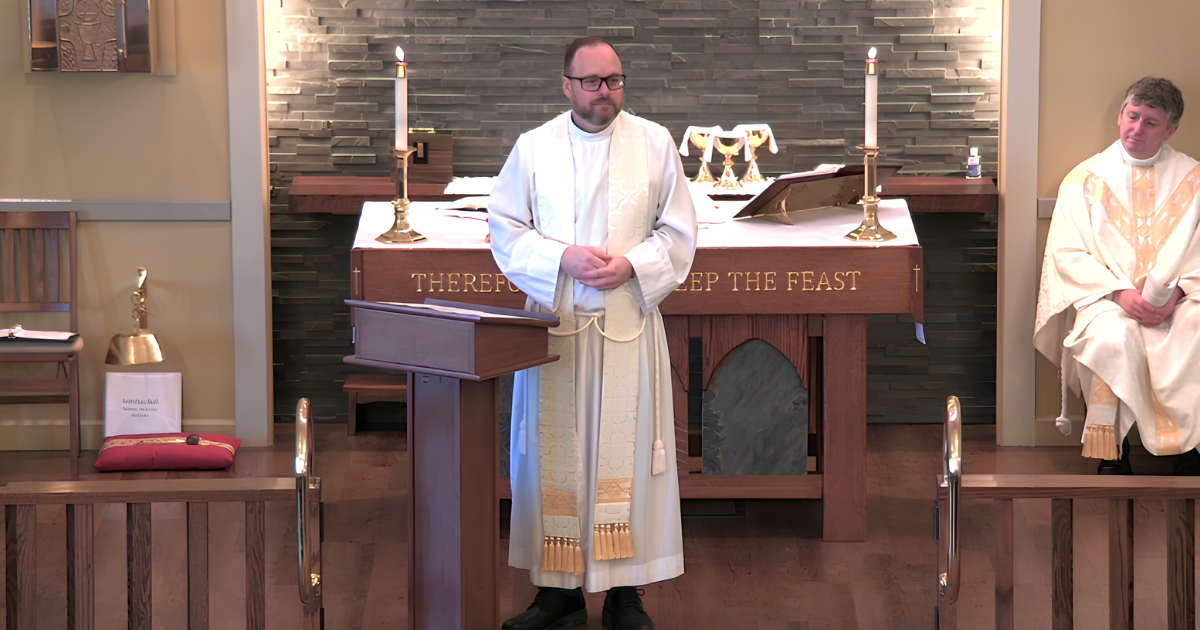
Preacher: The Rev. Logan Hurst
Scripture: John 17:1-11
There is a quiet but persistent human longing for togetherness. We sense that we belong to one another somehow — that division is not the final word. And yet most of us have discovered, often painfully, that being united is considerably harder than wanting to be united. The gap between the ideal and the reality is one of the most familiar features of human life.
What changes things is understanding what genuine unity actually is. Unity is not agreement on every question. It is not the erasure of difference. It is not the achievement of people who have finally managed to like each other. It is something more like harmony — distinct voices, shaped by love, moving together toward something larger than themselves. Harmony requires difference. It cannot exist without it.
What makes this possible is not an effort we summon from within but a grace extended from outside us. We remain connected not because we have mastered the spiritual discipline of tolerance but because something holds us when we would otherwise drift apart. That something is not an idea or a commitment. It is a person — one who welcomed the anxious and the doubting, the politically compromised and the ideologically extreme, and fed them all at the same table.
The grace that makes unity possible is the same grace that does not require us to be flawless before it arrives. It shows up before we have earned it. It persists after we have failed. It makes room for apology and forgiveness and the slow, ordinary work of staying connected when leaving would be easier.
The clearest picture of this is a table where no one has earned their seat, and everyone is fed.
Reflection Questions
Where in your own life do you find yourself confusing unity with uniformity — expecting agreement as the price of belonging?
In what relationships have you experienced the difference between being connected and being the same?
What does it feel like to be held in a community by grace rather than by your own effort to maintain it?
Where is the invitation to choose connection over division most difficult for you right now — and what makes it difficult?
How does the practice of gathering at a shared table shape the way you understand belonging in the rest of your life?