Joy Without Purpose
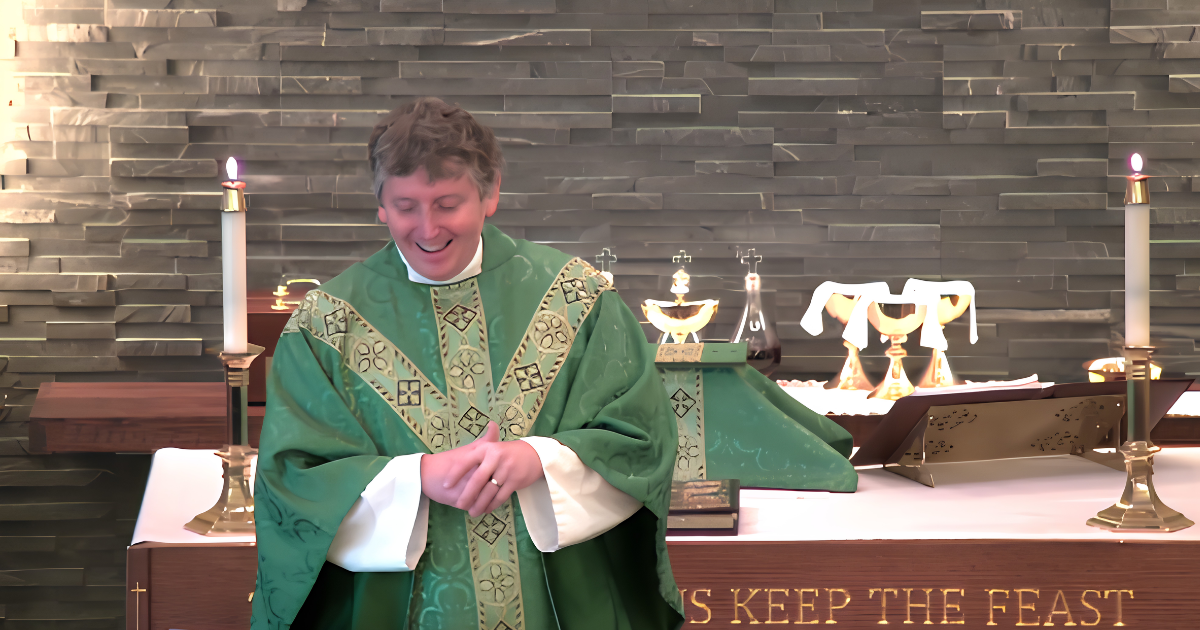
Preacher: The Rev. Andrew Van Kirk
Scripture: Matthew 9:9-13
There is a kind of weariness that comes not from too little, but from too much — too much striving, too much fixing, too much trying to make a life that finally feels like enough. At some point the list of things to accomplish and the habits to form and the problems to solve begins to feel less like a path forward and more like a treadmill. We keep moving, but we don't seem to arrive anywhere that satisfies.
The ancient practice at a dinner party was not to sit upright and attend to business. It was to recline — to settle in, let the conversation wander, and simply be in one another's company. This was never just about food. It was about presence. About the particular quality of ease that comes when you are with someone who is genuinely glad you are there.
What our hearts most need is not a better strategy. It is to be in the presence of someone whose company slowly changes us — not by demand, but by desire. When we are regularly in the presence of goodness, beauty, and love, we find that what we want begins to shift. The restlessness doesn't vanish overnight, but it loosens its grip. We start to want different things.
There is a prayer in the Anglican tradition that asks God to grant us grace to love what he commands and to desire what he promises — so that our hearts might be fixed where true joy is found. Notice that it does not ask for willpower or a cleaner record. It asks for reoriented desire. That is the kind of transformation that lasts. Not the kind we force on ourselves, but the kind that grows quietly in the company of Someone worth being with.
Reflection Questions
What would it mean for you to approach your spiritual life less like a task list and more like a dinner you've been invited to?
When have you experienced the presence of another person — human or divine — changing what you wanted, without you trying to change it?
What does "joy without purpose" feel like to you, and what makes it difficult to trust that it is enough?
Where in your daily life might you be most open to an unexpected encounter — not in a church or a quiet time, but in the middle of ordinary work?
What would it look like for your heart's deepest desire to shift — and what do you imagine standing in the way of that?